
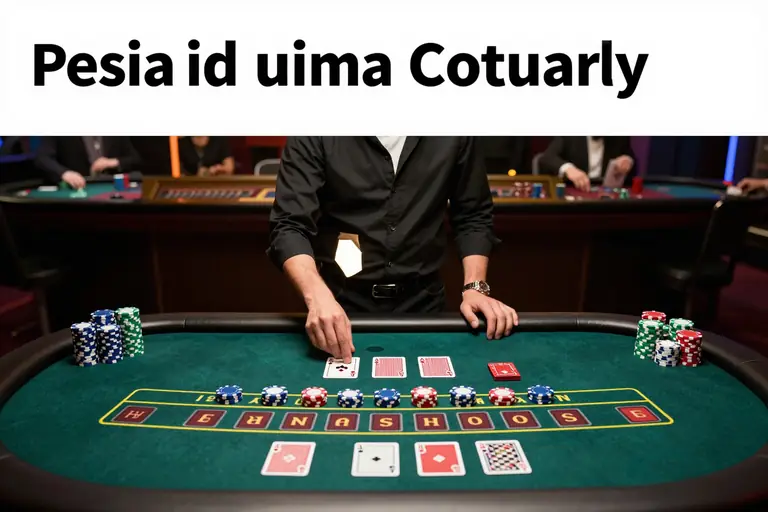
The Concept of House Edge in Casino Games
The house edge is a fundamental concept in casino gaming, representing the casino’s built-in advantage over players. It is expressed as a percentage of the player’s wager that the casino expects to keep over the long term. This percentage varies significantly from one casino game to another, influencing the potential return to player (RTP) and the overall odds.
Understanding why these edges differ helps players make informed choices about which games to play, based on their risk tolerance and desired gameplay experience. While the house edge guarantees the casino profitability over time, individual session outcomes remain unpredictable due to randomness.
Key Factors Influencing House Edge
Several elements contribute to the varying house edges across different casino games:
- Game Rules and Mechanics: The specific rules of a game are the primary determinant. For example, in blackjack, the dealer’s fixed drawing rules and the player’s option to hit or stand create a specific edge. In roulette, the presence of single zero (European) versus double zero (American) pockets significantly alters the house edge.
- Probability and Payouts: The mathematical probability of certain outcomes combined with the game’s payout structure directly impacts the house edge. If a game pays out less than the true odds of winning, the difference contributes to the house’s advantage.
- Player Decisions: For games involving skill or strategy, such as blackjack or video poker, optimal player decisions can reduce the house edge. However, mistakes or sub-optimal play can increase it, sometimes dramatically. Games of pure chance, like slots or craps, have a fixed house edge regardless of player action.
- Number of Outcomes: Games with more possible outcomes, like dice games or multi-reel slots, often have complex probability distributions that allow for varied house edges depending on the bet type.
- Side Bets and Optional Wagers: Many games offer optional side bets, which frequently come with a much higher house edge than the main game. Players often overlook this, thinking they are improving their chances, when in reality, they are increasing the casino’s advantage.
Illustrative Examples of House Edges in Popular Games
To illustrate, consider how the house edge manifests in common casino games:
- Slots: The house edge for slot machines can vary widely, typically ranging from 2% to 15% or more. This is programmed into the game’s random number generator (RNG) and payout schedule. A game with a 96% RTP has a 4% house edge.
- Blackjack: With optimal strategy, the house edge in blackjack can be as low as 0.5% to 1%, depending on the specific rules of the table (e.g., number of decks, dealer hits or stands on soft 17, surrender options). Poor strategy can increase this significantly.
- Roulette: European Roulette (single zero) typically has a house edge of 2.7%. American Roulette (double zero) has a higher house edge of 5.26% due to the extra ’00’ pocket, which doubles the casino’s advantage on most bets.
- Baccarat: The house edge in baccarat is generally low, around 1.06% on the Banker bet and 1.24% on the Player bet. The Tie bet, however, often has a much higher house edge, sometimes over 14%.
- Craps: The house edge in craps varies greatly by bet type. Pass/Don’t Pass bets typically have a low edge (around 1.4%), while proposition bets in the center of the table can have edges as high as 10% or more.
What This Means for Players
The varying house edges mean that some games offer better long-term odds than others. Games with a lower house edge generally allow for longer playtime on a given bankroll, as the casino’s advantage is smaller. Conversely, games with a high house edge can deplete a bankroll more quickly, though they often offer the allure of larger, less frequent payouts.
For players, understanding the house edge helps in:
- Game Selection: Choosing games that align with their preferred balance of risk and potential return.
- Strategy Application: For skill-based games, learning and applying optimal strategy is crucial to minimize the house edge.
- Bankroll Management: Recognizing that the house edge ensures the casino’s long-term profitability and managing expectations accordingly.
Checking Game Information on BYGAME
When exploring casino games on a platform like BYGAME, it’s advisable to check for information regarding game rules and theoretical return to player (RTP) percentages. This information is often available within the game’s help section, information icon, or paytable. Understanding these details for each specific game variant can help you make informed decisions about your gameplay.
Decision: Choosing Your Game Based on House Edge
To make an informed decision about which casino game to play, consider the following:
- Identify Your Priority: Are you looking for longer playtime and a smaller risk of losing your bankroll quickly, or are you chasing larger, albeit rarer, payouts?
- Review the House Edge: Consult the game’s information or reliable sources to find the specific house edge for the variant you plan to play. Remember, a lower percentage is generally better for the player in the long run.
- Assess Skill vs. Chance: If you enjoy strategy, games like blackjack or video poker allow you to influence the house edge with optimal play. If you prefer pure chance, understand that the house edge is fixed and often higher.
- Compare Bet Types: Within a single game (e.g., craps, baccarat), different bets can have vastly different house edges. Always opt for the bets with the lowest edge if maximizing your chances is the goal.
- Factor in Side Bets: Be wary of side bets, as they almost always carry a significantly higher house edge. Decide if the potential payout is worth the increased risk.
Next Step: Apply Your Knowledge on BYGAME
Now that you understand how house edges work and influence your gameplay, put your knowledge into practice:
- Log in to BYGAME: Access your account to browse the available game selection.
- Select a Game Category: Choose between slots, table games, live casino, or other categories that interest you.
- Open a Game’s Information Panel: Before placing a bet, look for an ‘i’ icon, ‘Help’, or ‘Paytable’ button within the game interface.
- Locate RTP/House Edge Information: Find the theoretical Return to Player (RTP) percentage or details about the game’s rules that indicate its house edge.
- Start with Practice Play (if available): If BYGAME offers a demo or free-play mode, use it to familiarize yourself with the game’s mechanics and rules without risking real money, especially for skill-based games where strategy matters.
- Set a Budget and Stick to It: Regardless of the house edge, always gamble responsibly and within your predetermined limits.